


Introduction
When a painting, a piece of music, or a passage of text is created with the involvement of artificial intelligence, who is legally recognized as the author, and is such a work protected by copyright at all? This is a question that many countries are still grappling with. In Vietnam, an initial answer has now emerged.
On 6 April 2026, the Government issued Decree No. 134/2026/ND-CP amending and supplementing Decree No. 17/2023/ND-CP on copyright and related rights. The Decree took effect on 9 April 2026. For the first time, Vietnamese law directly regulates the arising of copyright in products created with the use of artificial intelligence, while also establishing a framework of conditions for using copyrighted data to train such systems. This article analyzes those core provisions and outlines the preparatory steps that businesses and creators should take.
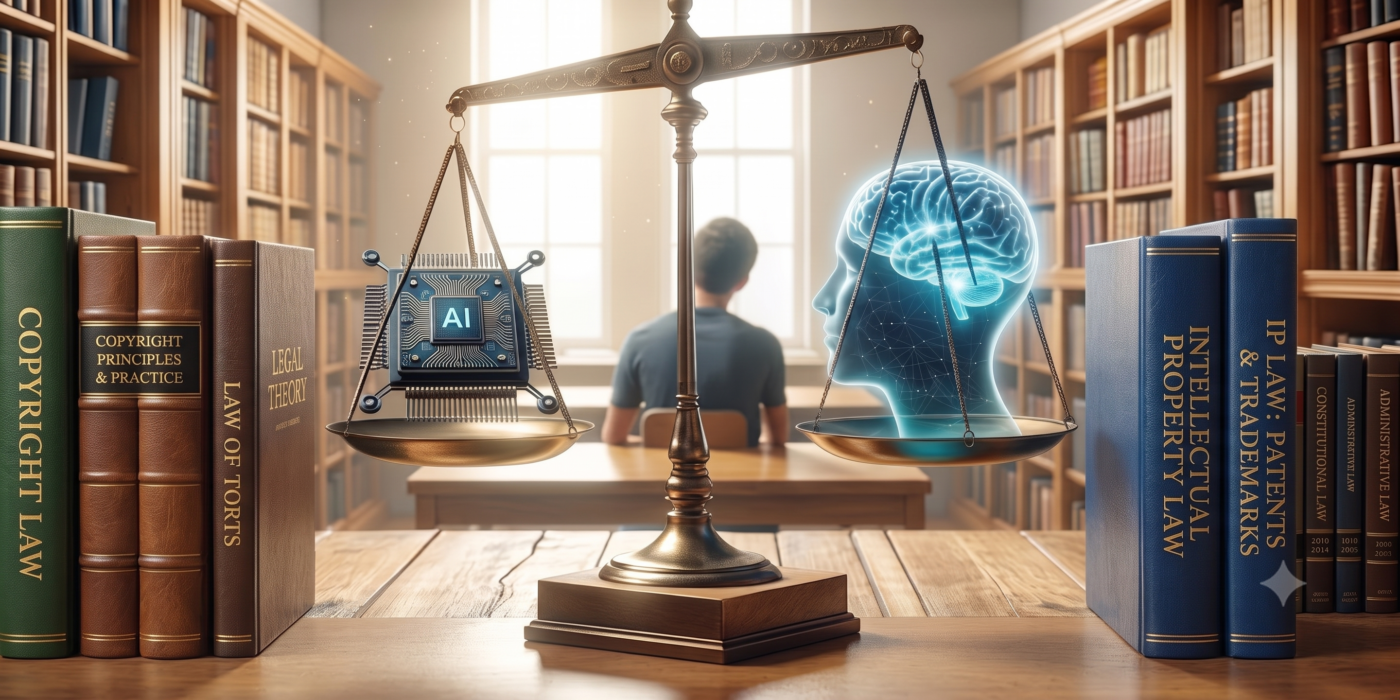
Legal Basis: From Statute to Decree
Before turning to the details, it is necessary to locate these provisions within the hierarchy of legal instruments, because this determines how they are to be understood and cited.
The foundation lies at the statutory level. The Law on Intellectual Property, following its most recent amendment by Law No. 131/2025/QH15 (effective from 1 April 2026), delegated to the Government the task of setting out detailed regulations on two key matters. Clause 5, Article 6 of the Law on Intellectual Property assigns to the Government the task of regulating the arising and establishment of intellectual property rights where the subject matter of the rights is created with the use of an artificial intelligence system. Clause 5, Article 7 of the Law on Intellectual Property provides the basis for limiting rights when lawfully published texts and data are used for scientific research, experimentation, and the training of artificial intelligence. The task of providing detailed regulations is carried out at the decree level. For industrial property rights, the Government issued Decree No. 100/2026/ND-CP dated 31 March 2026. For copyright and related rights, the Government issued Decree No. 134/2026/ND-CP. The latter does not create a standalone instrument, but rather amends and supplements the existing Decree No. 17/2023/ND-CP. Specifically, Article 4 of Decree No. 134/2026/ND-CP inserts a new article, Article 5a, into Decree No. 17/2023/ND-CP, immediately following Article 5. For this reason, every reference to “Article 5a” in this article is a reference to Article 5a of the current Decree No. 17/2023/ND-CP, that is, the portion supplemented by Decree No. 134/2026/ND-CP.
The Governing Principle: The Human Being Is the Root of Copyright
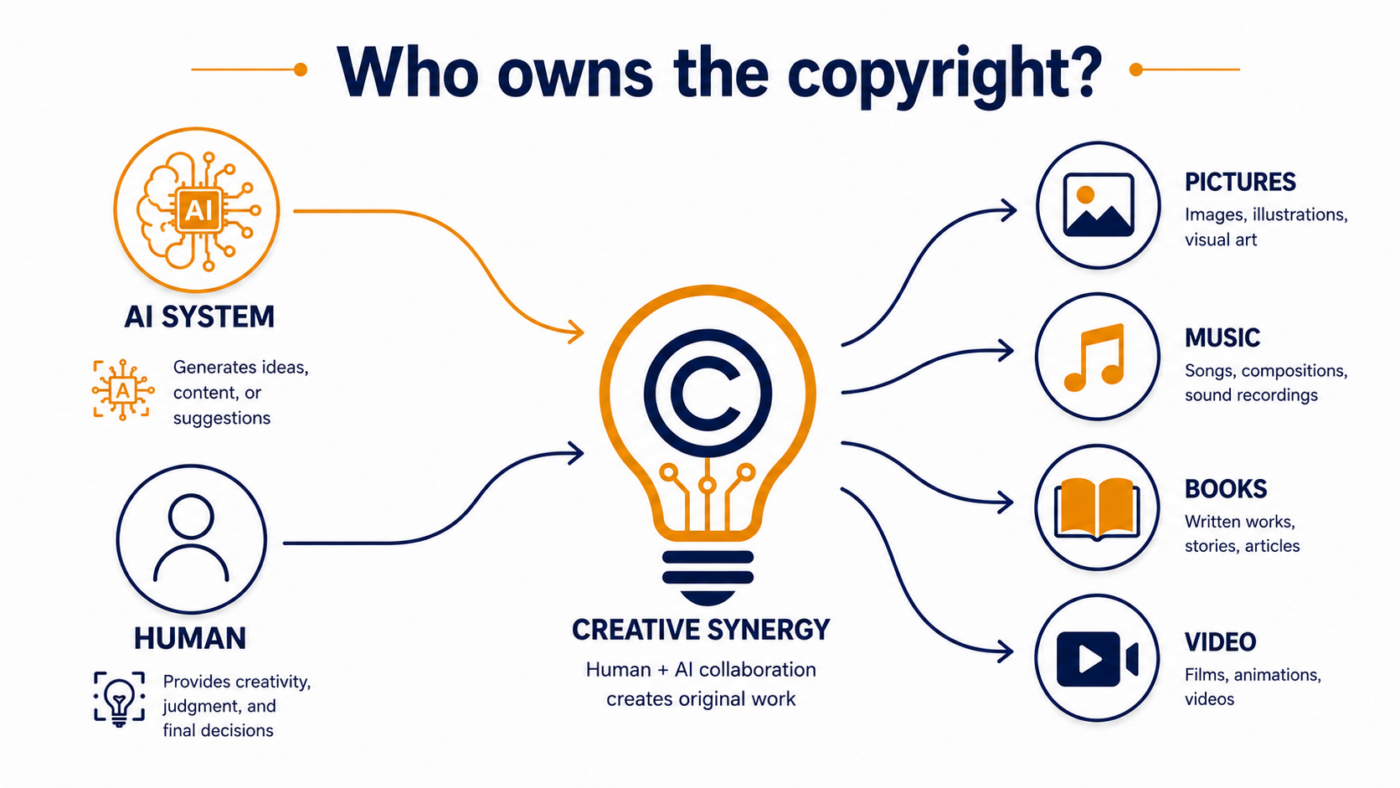
Vietnam’s entire approach to the AI question revolves around an enduring principle of copyright law: only creations that bear the personal imprint of a human being, reflecting human choice and direct human control, are protected. Artificial intelligence, however sophisticated, is regarded merely as a tool, not as a subject of rights.
This principle is concretized in Clause 1, Article 5a. Under this provision, copyright and related rights in a work, performance, sound recording, video recording, or broadcast created with the use of artificial intelligence arise only where three conditions are met. First, a human being makes a substantial and decisive contribution to the creation. Second, a human being bears responsibility for the content and legality of the product. Third, the creation of the product does not infringe the copyright or related rights in the subject matter used as input data for the system.
Conversely, Clause 9, Article 5a states categorically: a product created entirely by artificial intelligence, or one that does not satisfy the above conditions, does not give rise to copyright or related rights.
The consequences of this provision are greater than they appear. A product that is not protected is not an unlawful product; rather, it is a product with no copyright owner. Where no one holds an exclusive right, in principle anyone may copy and reuse it. For a business that has invested substantially in AI-generated content, this is a commercial risk to be identified early, not merely an academic matter.
What Constitutes a “Substantial and Decisive Contribution”?
The pivotal condition, and also the most difficult to quantify, is the degree of human contribution. Point a, Clause 1, Article 5a lists the forms of contribution recognized as substantial and decisive. These include: providing one’s own original input data or technical parameters, or building design documentation for a computer program; setting the prompts to control the system; assessing, selecting, editing, intervening in, or interpreting the results produced by the system; selecting, arranging, and organizing the content and form of expression; and making decisions that express an artistic or aesthetic intent or professional skill, and determining the final result so that it reflects one’s own idea rather than being left to the random or automated arrangement of the algorithm.
The focus of the provision lies in the two qualities of being “substantial” and “decisive.” Merely entering a simple prompt and keeping the result unchanged will likely fall short of the threshold, because in that case it is the system that shapes the product, while the human plays only the role of initiator. Copyright is recognized only where the human genuinely governs the process, controls the result, and bears responsibility for the content. Following this logic, the more detailed the prompts, the more extensive the editing and refinement, and the deeper the editorial intervention, the greater the likelihood that rights will arise.
It is worth noting that the Decree does not set a quantitative threshold, such as a percentage of content edited by a human. This is a qualitative standard, so its application depends on a case-by-case assessment by the competent authority and, in the event of a dispute, by the courts. This margin of flexibility creates a zone of legal uncertainty, requiring the parties to manage risk proactively rather than expecting a universal formula.
Who Is the Author, and Who Bears the Burden of Proof
Where the conditions for the arising of rights are satisfied, Clause 3, Article 5a identifies the person who created the work as the author. Artificial intelligence may not be named and may not be treated as a co-author.
The point of greatest practical significance, however, lies in the burden of proof. Clause 7, Article 5a provides that, when protection of rights is requested, the creator must be able to prove their creative process and must truthfully declare the use of artificial intelligence when required by the competent authority. Clause 8, Article 5a then lists the documents that may be used as evidence, including: input data, technical parameters, or design documentation for a computer program, together with drafts and intermediate versions produced during the creative process; prompt history, interaction data, and technical parameters; and documents describing the creative process or other lawful documents demonstrating the intellectual contribution and control of a human being.
Compared with common practice, this is a landmark change. For an ordinary work, copyright arises automatically the moment the work is fixed, and the creator does not have to account for how it was made. For a work created with the use of AI, retaining evidence of the creative process becomes a practical precondition for protecting the rights. Content producers should therefore establish, from the outset, the habit of storing prompts, edited versions, and editorial logs, treating this as a component of their intellectual property records.
An Easily Overlooked Obligation: Labeling AI Products
Alongside the determination of rights, Clause 6, Article 5a imposes an obligation that businesses may easily overlook. Under this provision, the display labeling and technical marking of products created with the use of artificial intelligence must be carried out in accordance with the law on artificial intelligence.
This provision connects Decree No. 134/2026/ND-CP with the broader legal framework on artificial intelligence, helping consumers and regulators distinguish products created purely by humans from products involving machine participation. For businesses in advertising, media, and content creation, this is a compliance point to build into the release process from the very beginning, since improper labeling may give rise to legal risks in related fields.
Input Data: Conditions for Using Copyrighted Works to Train AI
Decree No. 134/2026/ND-CP does not stop at the output side—the AI-generated product—but also governs the input side, namely the data used for training. The Decree adds to Chapter III of Decree No. 17/2023/ND-CP a new section comprising three articles: Article 37a, Article 37b, and Article 37c. All three are articles of Decree No. 17/2023/ND-CP, supplemented by Decree No. 134/2026/ND-CP, and they implement the limitation of rights set out in Clause 5, Article 7 of the Law on Intellectual Property.
Conditions for using protected data (Article 37a). First, the data must be lawfully published, accessed through lawful conduct and from a lawful source, and the technological measures used by the owner to protect the rights must not be removed or circumvented. In addition, Clause 2 of Article 37a sets out three cumulative conditions: the use is solely for the purpose of scientific research, experimentation, and training of artificial intelligence, and not for commercial purposes; the use does not conflict with the normal exploitation of the data and does not unreasonably prejudice the legitimate interests of the owner; and the output of the system does not replace the market for the data and does not create unfair competition against the very subject matter that was used. In essence, this is the familiar “three-step test” of international copyright law, now applied to the artificial intelligence context.
The owner’s reservation right (Article 37b). Article 37b grants authors, performers, copyright owners, and related-rights owners the right to declare that their texts and data may not be used for scientific research, experimentation, or the training of artificial intelligence, save for the exceptions permitted by law. Notably, the reservation must be expressed through clear and public mechanisms. Clause 2 of Article 37b sets out two forms: expression in metadata, technological protection measures, or rights management information in machine-readable form, attached to the original or a copy and made publicly available; or public announcement on the website of an authorized collective management organization. This approach resembles the opt-out mechanism allowing owners to refuse in advance under European Union copyright law.
Obligations of the user (Article 37c). Article 37c requires organizations and individuals using protected data to retain technical records and training data and to make them available upon request by the competent state authority for verification and dispute resolution; they must also respect the reservation right under Article 37b. Most importantly, Clause 2 of Article 37c provides that, when protected data is commercially exploited to train artificial intelligence, organizations and individuals must fulfill the obligation to pay royalties from the time of use. The line is thus drawn clearly: non-commercial research may benefit from the exception, but training artificial intelligence for commercial purposes requires payment of royalties and respect for the will of the owner.
Comparison with International Practice
Vietnam’s approach meets the major jurisdictions on fundamental points while retaining its own features. With respect to AI-generated products, the requirement of human creativity aligns with the position of the U.S. Copyright Office, which refuses protection for content lacking human authorship. With respect to training data, the reservation-right mechanism in Article 37b is close to the opt-out model applied to text and data mining under European Union copyright law. Where Vietnam is relatively clear is in the obligation to pay royalties upon commercial exploitation, coupled with the requirement of truthful declaration of AI use and the obligation to label products.
Recommendations for Businesses and Creators
The changes described above can be translated into concrete action steps.
For businesses producing content, advertising, and media using AI, the first priority is to establish a creative-trail process, comprising prompt history, intermediate versions, and human editorial logs. This serves both as a basis for proving rights under Clauses 7 and 8 of Article 5a and as a defensive record when disputes arise. In parallel, contracts with freelancers, agencies, and AI platform providers should be reviewed to clarify who owns the rights in the output and who bears responsibility when a product fails to qualify for protection. The obligation to label AI products under Clause 6, Article 5a should also be incorporated into the release process.
For owners holding valuable content libraries, consider exercising the reservation right under Article 37b through machine-readable mechanisms and public declarations, if you do not want your data used to train AI. In some situations, inaction may be construed as an absence of objection.
For entities developing or fine-tuning AI models with a commercial element, a compliance mechanism should be built to respect reservation rights, to self-assess against the three-step test in Article 37a, and to prepare for the royalty-payment obligation under Clause 2, Article 37c when commercially exploiting protected data.
Summary
Article 5a, together with the group of Articles 37a, 37b, and 37c of Decree No. 17/2023/ND-CP—the portion supplemented by Decree No. 134/2026/ND-CP—marks Vietnam’s first and relatively complete step in codifying the relationship between artificial intelligence and copyright, covering both output and input. The overarching legal message is consistent: the human being remains at the center of copyright, artificial intelligence is merely a tool, and what the law protects is the value of genuine creative labor.
That said, because the criterion of a substantial and decisive contribution is qualitative in nature, the precise boundaries will only become clear gradually through practical application, particularly through the first registration files and disputes. While practice takes shape, the prudent choice for businesses and creators is to proactively document the creative process, be transparent in declaring AI use, and manage rights in a systematic manner. If your business needs to assess the level of protection for AI-assisted content, build documentation and compliance processes, or exercise data reservation rights, please contact us for advice tailored to your specific situation.
References
- Law on Intellectual Property (Law No. 50/2005/QH11, as amended and supplemented by Laws No. 36/2009/QH12, 42/2019/QH14, 07/2022/QH15, 93/2025/QH15, and 131/2025/QH15): Clause 5, Article 6; Clause 5, Article 7.
- Decree No. 17/2023/ND-CP dated 26 April 2023, as amended and supplemented by Decree No. 134/2026/ND-CP dated 6 April 2026 (effective from 9 April 2026): Article 5a (Clauses 1, 3, 6, 7, 8, 9), Article 37a, Article 37b, Article 37c.
- Decree No. 100/2026/ND-CP dated 31 March 2026 (concerning industrial property rights involving AI, cited for reference).



Need Legal Advice on Intellectual Property?
Our experienced IP lawyers provide comprehensive services: patent and trademark registration, industrial design, copyright, dispute resolution...
Get Free Consultation