


The digital era has brought many advantages, but it has also given rise to numerous problems—most notably copyright infringement in cyberspace. This issue attracted significant attention in various presentations at the scientific conference “Improving the Overall Quality of Publications in the New Context,” organized by the Central Commission for Propaganda and Mass Mobilization on March 21.
Affirming that digital publishing and digital information resources play an essential role in developing reading culture in the Industry 4.0 era and are part of a broader global trend, Ms. Kieu Thuy Nga, a leader of the Department of Grassroots Culture, Family and Libraries under the Ministry of Culture, Sports and Tourism, emphasized the need for a thorough and comprehensive understanding of this issue.
According to Ms. Nga, in order to better meet the growing demand of readers, publishing houses in recent years have gradually implemented digital transformation, actively applying digital technologies to digitize data, transform workflows, and promote electronic/digital publishing. This has resulted in products that meet the diverse reading needs of society.
Copyright Infringement Moves into Cyberspace
Statistics from the Department of Publishing, Printing and Distribution on publishing activities in 2023 show that 24 out of 57 publishing houses participated in electronic publishing and distribution, accounting for 42.1% of all publishers. The proportion of electronic publications reached 15.3% of total publications, exceeding the target of 12%. Publications applying new technologies increased significantly, reaching 4,000 titles (up 19.4%), with approximately 36 million copies (up 11%). Each year, more publishers participate in electronic distribution, providing a growing number of digital publications, e-books, and audiobooks to meet public demand and contribute to the development of reading culture.
While acknowledging the many opportunities brought by the digital era, Youth Publishing House—one of the earliest adopters of digital publishing and e-books—also pointed out that numerous challenges remain, particularly copyright infringement.
Along with technological development, intellectual property infringements are carried out through increasingly sophisticated methods, without geographical limitations, making them difficult for consumers and authorities to detect. Moreover, such infringements are indirectly supported by many users who read, watch, or listen to pirated copies online. In some cases, literary and artistic works are used to create new content for social media without permission or payment of royalties.
Copyright infringement takes many forms, including copying and reformatting content before uploading it to websites, social media platforms, and mobile applications—sometimes for profit, sometimes disguised as free services for readers. Some platforms even brazenly change the translator’s name to avoid detection of pirated or counterfeit books sold via social media and e-commerce platforms. Other violations include livestreaming book readings on social media to boost engagement, as well as summarizing or reviewing books without authorization.
According to Youth Publishing House, although the legal framework has been increasingly improved and management authorities have made considerable efforts, copyright and related rights infringements—especially in the digital environment—remain complex and sophisticated. Overall copyright protection, particularly online, has yet to meet current demands.
Investment in human resources at both central and local levels, as well as in information technology for management, enforcement, prevention, and combating copyright infringement in cyberspace, has not kept pace with new challenges. Administrative penalties stipulated in Decree No. 131/2013/NĐ-CP are relatively low and lack sufficient deterrent effect. Some violations also lack appropriate supplementary penalties and corrective measures in line with the amended Intellectual Property Law.
Challenges in E-books and Audiobooks
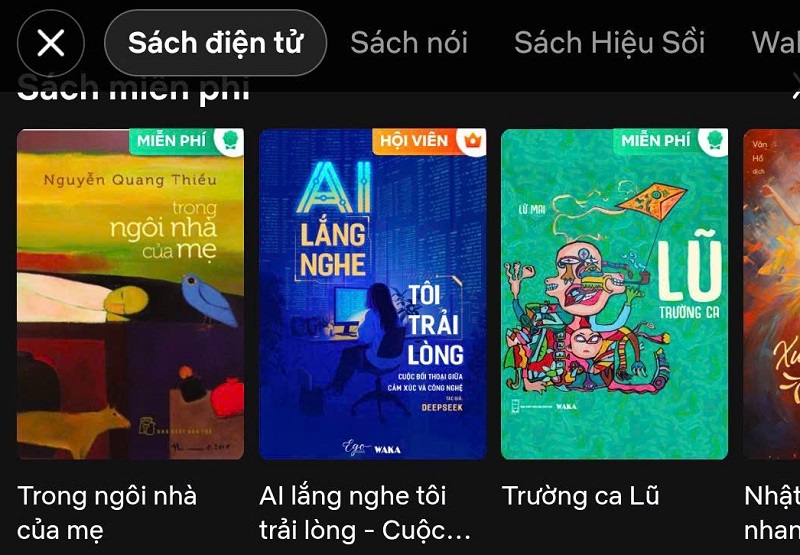
Representatives of Wewe Technology JSC also stated that e-books and audiobooks are global trends and an indispensable part of the international publishing industry. In Vietnam, however, the audiobook and e-book markets are still in an early stage, with the emergence of platforms such as Voiz FM, Fonos, Waka, Soundio, and Bookas.
Nevertheless, copyright infringement and piracy remain the biggest challenges for electronic publishing businesses. With rapid technological advancement, copyright violations occur quickly and on a large scale, causing serious difficulties for business operations. This leads to significant losses for content providers and reduces incentives to invest in high-quality content. Although Wewe actively protects its content, enforcement remains ineffective due to limitations in sanctions, regulatory oversight, and readers’ awareness of copyright protection.
To address these issues, additional copyright protection mechanisms are needed. State management agencies should coordinate with internet service providers and social organizations to implement preventive and enforcement measures against copyright infringement. Publishers and distributors should also proactively report violations and request the removal of infringing content from online platforms. Public awareness campaigns and education on reading culture should be strengthened to emphasize the importance of respecting intellectual property rights and the negative consequences of using pirated materials. Consumers should be encouraged to use legitimate, high-quality sources that properly license content from authors or publishers.
Vietnamese Education Publishing House Faces Digital Copyright Infringement
Vietnam Education Publishing House (VEPH) has recently sent an official letter to the Inspectorate of the Ministry of Culture, Sports and Tourism and the Internal Political Security Department of the Ministry of Public Security, requesting action against copyright infringement on digital platforms.
The letter states that in implementing Party and State resolutions on reforming general education curricula and textbooks, VEPH has completed the compilation of two textbook series—“Connecting Knowledge with Life” and “Creative Horizons”—from grades 1 to 12. These series have been approved by the Ministry of Education and Training and widely adopted by general education institutions nationwide.
However, recently, websites and online learning platforms such as Easyclass (operated by Easy Class Education Technology Co., Ltd.) have uploaded audio files of these textbooks and electronic learning materials developed based on the structure, themes, texts, and editorial ideas of the two textbook series, charging teachers and students for access. According to Clause 2, Article 20 of the Intellectual Property Law (2005, amended in 2009, 2019, and 2022), the creation of derivative works requires permission from the copyright holder and payment of royalties and other material benefits, if applicable.
The production and commercialization of electronic learning materials based on textbooks without VEPH’s permission constitute copyright infringement. This not only seriously violates intellectual property laws and infringes upon the rights of VEPH and the authors, but also directly affects the legitimate rights and interests of teachers and students using these platforms.
VEPH has requested relevant authorities to investigate and clarify these violations, uphold the rule of law, and protect the legitimate rights and interests of businesses, teachers, and students nationwide.
Duc Huy





Need Legal Advice on Intellectual Property?
Our experienced IP lawyers provide comprehensive services: patent and trademark registration, industrial design, copyright, dispute resolution...
Get Free Consultation